Software for generating synthetic astronomical observables
Show detailsHide details
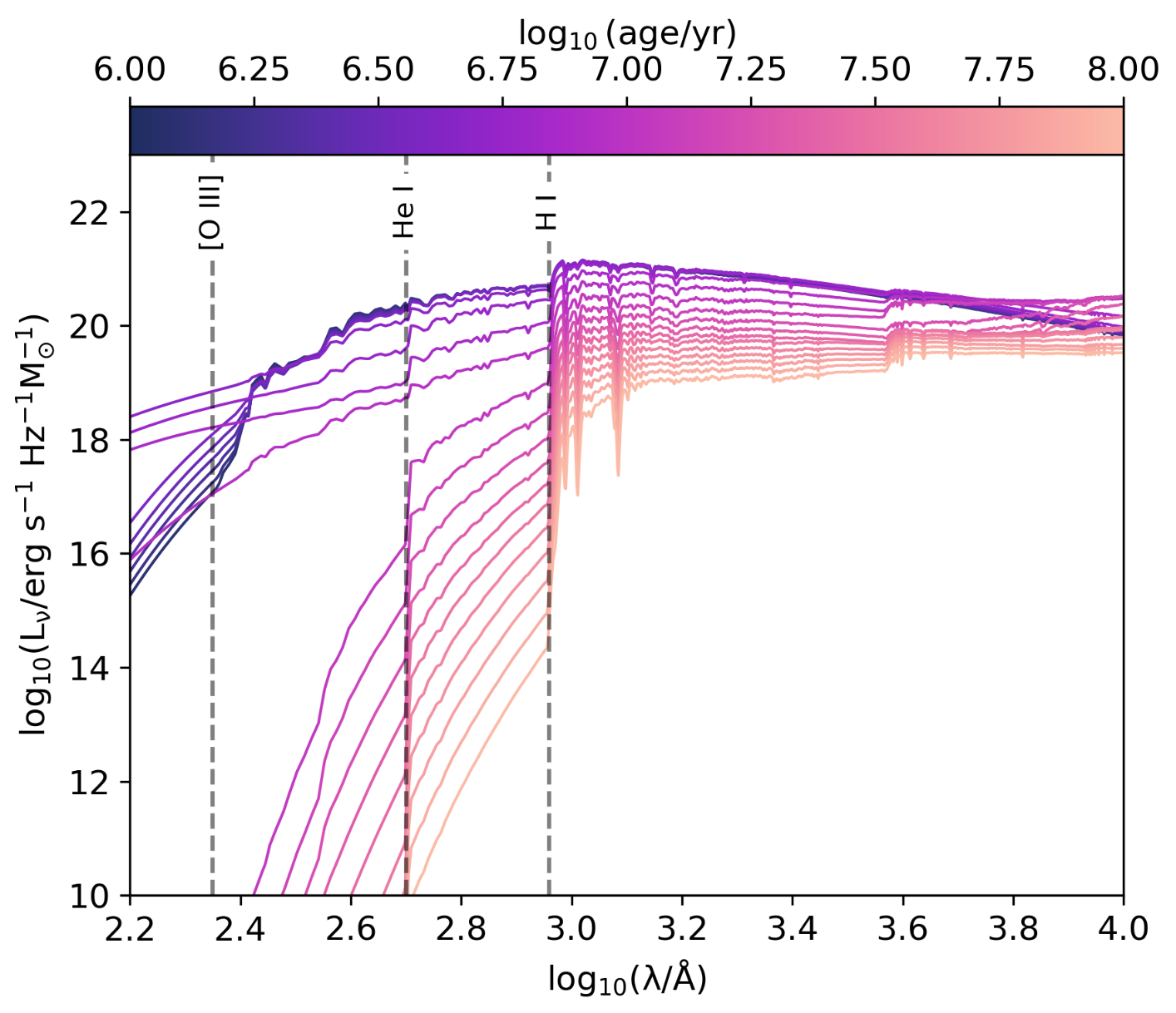
The Synthesizer project is an open source suite of tools for forward and inverse modelling of astrophysical observables. The main element is a Python package for generating synthetic astrophysical observables, designed to be modular, fast and extensible, and allowing direct comparisons between simulations and data in observational space. The Synthesizer ecosystem of tools is growing, and includes SPS emulation, photoionisation modelling of stellar and AGN sources, and SED fitting approaches.
Predicting the most extreme objects in the Universe
Show detailsHide details
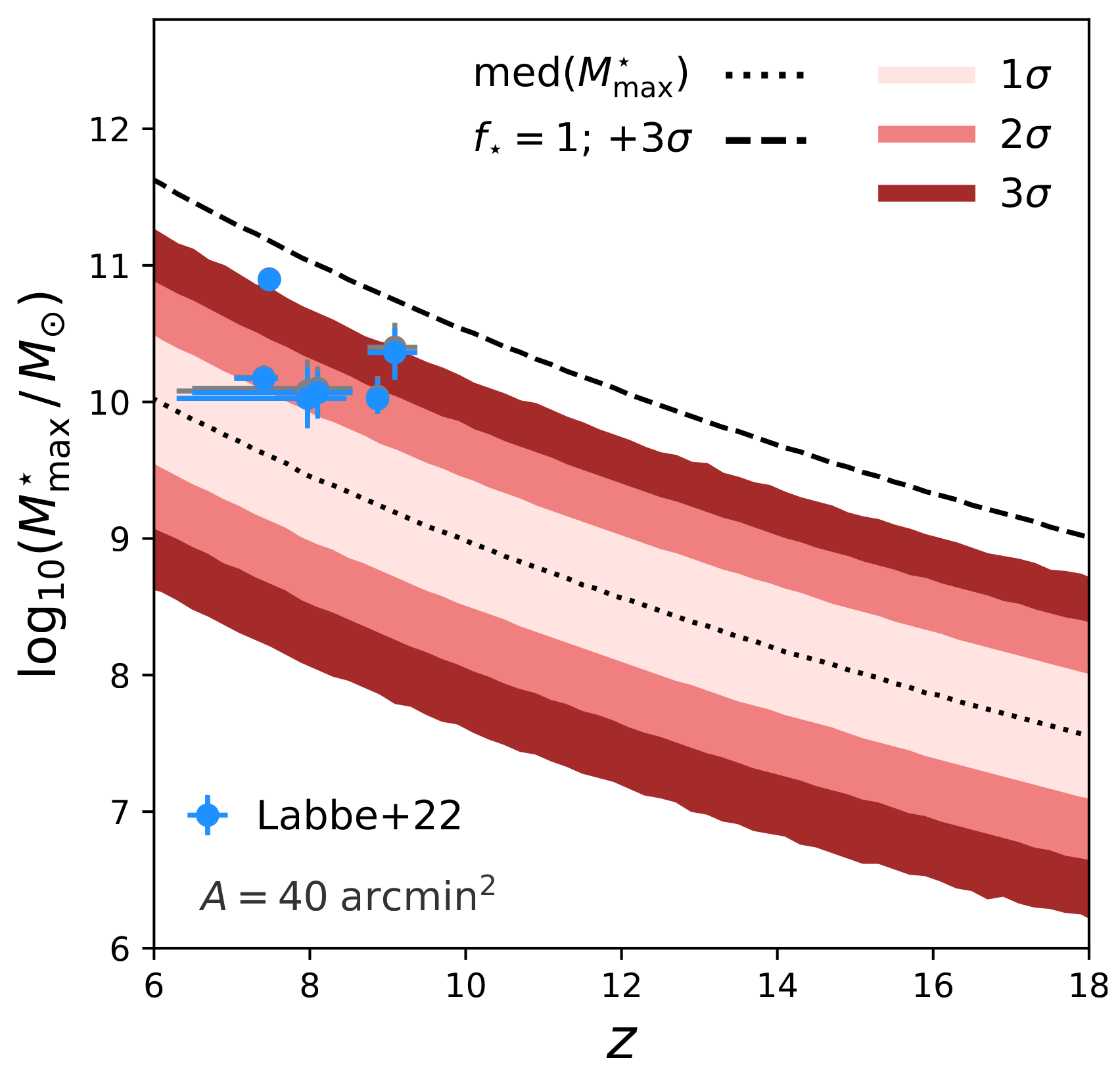
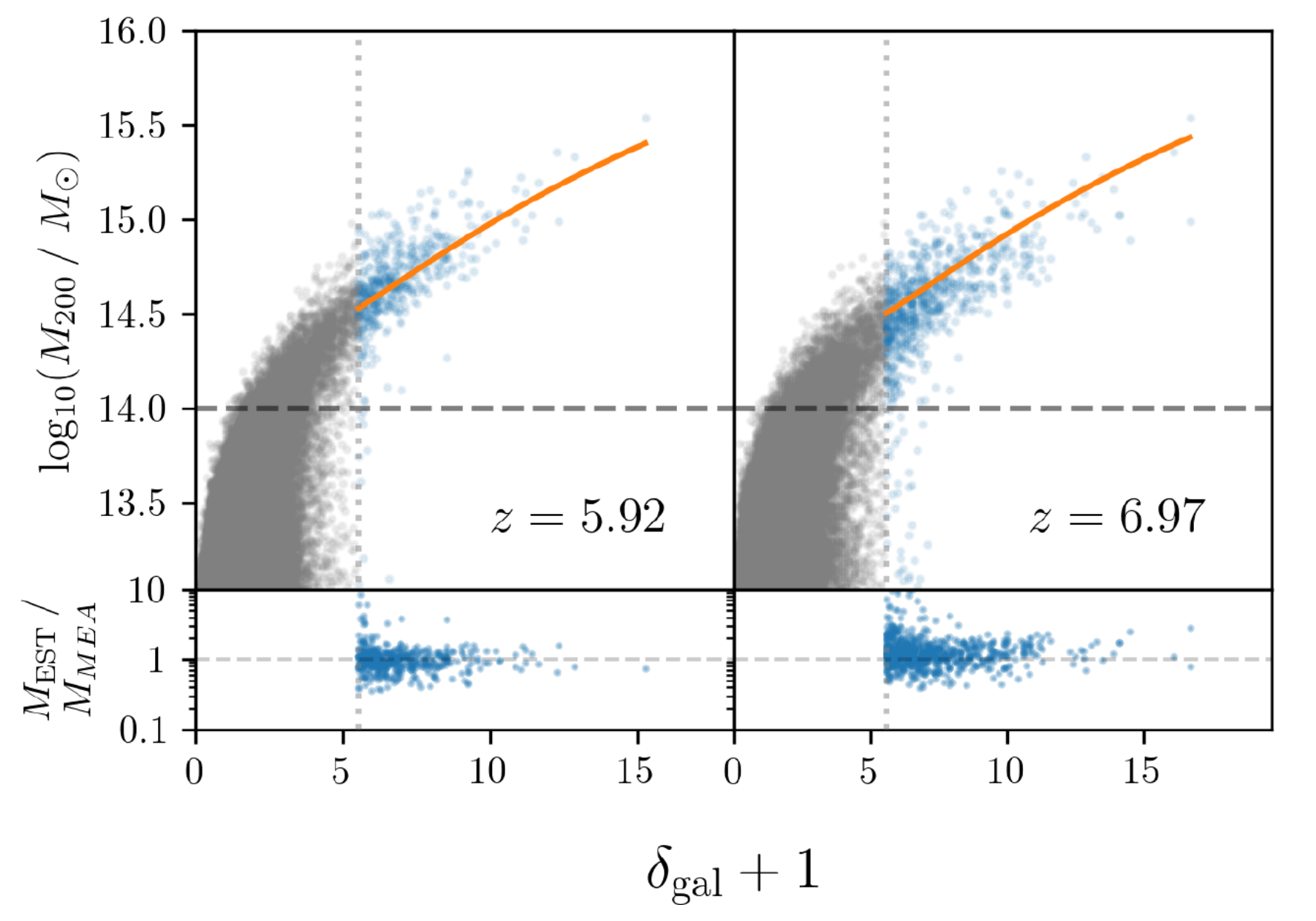
An application of extreme value statistics (EVS) to predict the most massive haloes and galaxies ion the Universe at high redshift. We used the technique to quantify early JWST tension claims, and it is now being used to assess new extreme candidates, including the impact of cosmic variance. We are also exploring these techniques in the observational space.
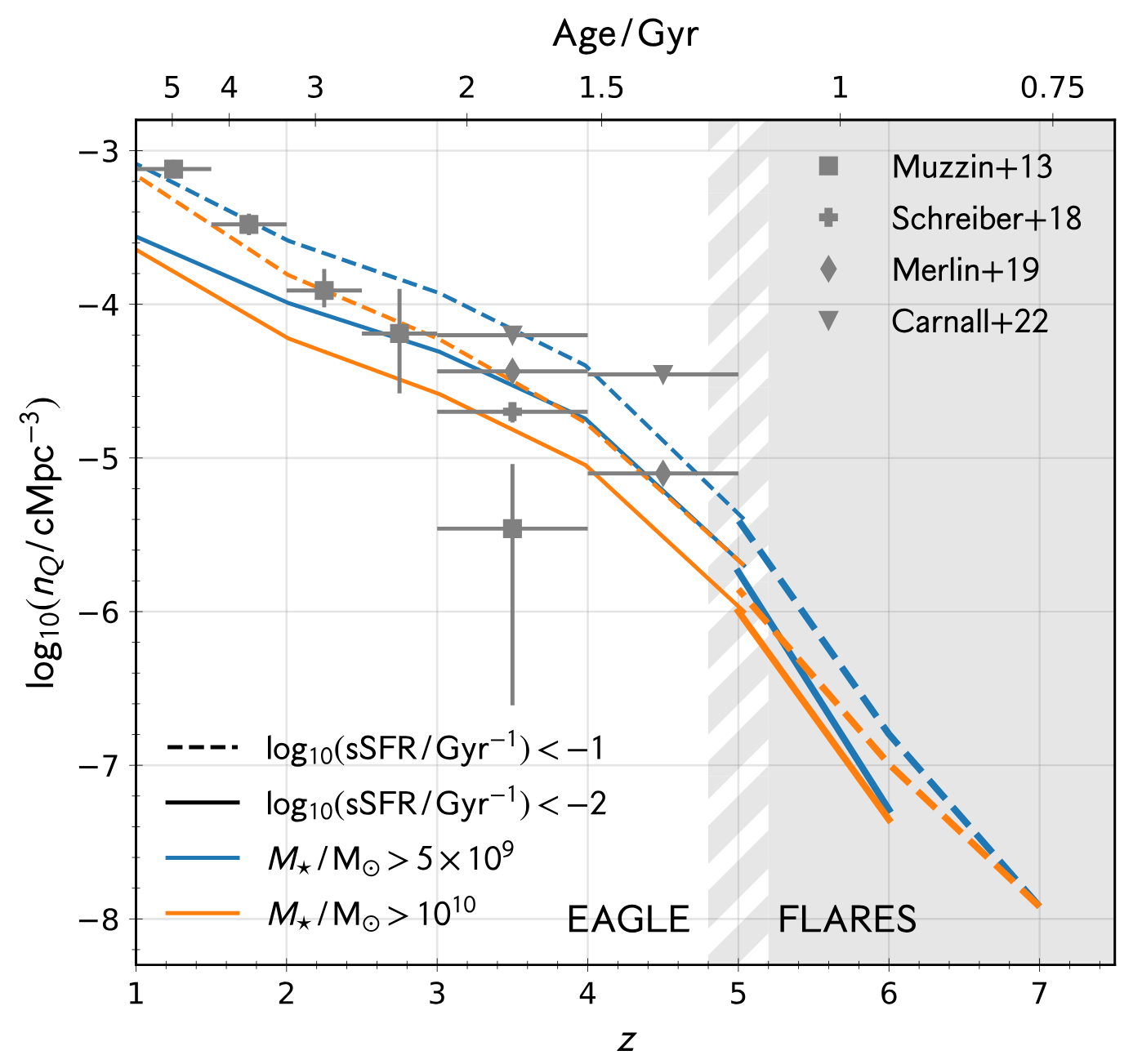
The first passive galaxies are pristine environments within which to study early galaxy evolution, as well as providing some of the toughest constraints on models of early galaxy formation. I have studied passive early galaxy populations in a number of works, in particular in our FLARES suite of numerical zoom simulations.
I apply machine learning and deep learning methods in a number of different ways in my work, but I predominantly use them to accelerate and extend my simulation-based science. This includes acceleration through emulation, probabilistic modelling of stochastic processes through neural density estimators, and incorporation within inference schemes, with applications to galaxy spectra, star formation histories and the galaxy-halo connection.
Simulation-based inference combines detailed forward models with modern neural density estimation for likelihood-free Bayesian analysis. I apply these methods to astrophysical and cosmological parameter inference and model comparison, including tasks in SED fitting and field level inference.
Modelling stellar populations, for observational and theoretical applications
Show detailsHide details
Stellar Population Synthesis (SPS) is a core ingredient in almost all forward models of galaxy emission. I have worked on a number of approaches and applications of SPS modelling, including detailed post-processing with photoionisation codes using synthesizer, visualisation with tools such as Sengi, and emulation with neural density estimators.
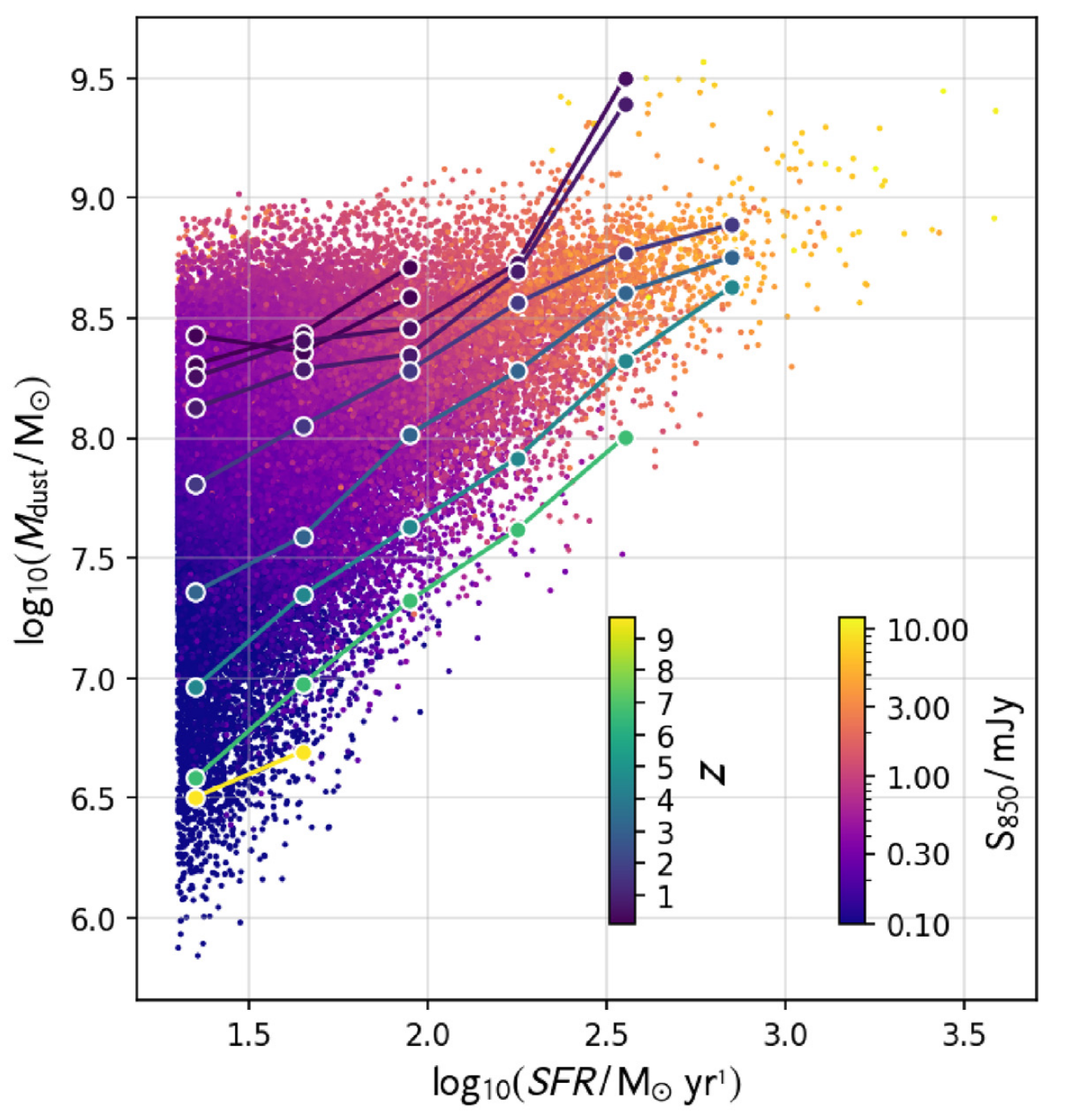
I have conducted a number of studies into dusty star-forming galaxies in the early Universe. This includes modelling their far-IR to sub-mm observables in hydrodynamic simulations through dust radiative transfer approaches, and exploring the implications for their number counts, and the impact of orientation effects.
I jave explored the impact of environment on early galaxy evolution in a number of works, with a particular focus on the priogenitors of massive galaxy clusters, protoclusters.